
What Does a Serpentine Belt Do?
A serpentine belt is a long, flexible, ribbed drive belt that transfers mechanical power from the engine’s crankshaft pulley to selected accessories. Its winding path around multiple pulleys gives it the name “serpentine.”
Depending on the vehicle’s design, a serpentine belt may drive:
- Alternator: Generates electrical power and charges the vehicle’s 12-volt battery while the engine runs.
- Air conditioning compressor: Helps operate the cabin cooling system.
- Power steering pump: Provides hydraulic steering assistance in vehicles equipped with belt-driven hydraulic power steering.
- Water pump: Circulates engine coolant on vehicles where the water pump is driven by the accessory belt.
Not every vehicle uses the same arrangement. Some have separate accessory belts, electric power steering, or electrically driven water pumps. Many hybrid and electric vehicles also use different accessory-drive designs.
A serpentine belt is not the same as a timing belt. A timing belt synchronizes critical engine components, including the crankshaft and camshaft, while an accessory belt operates external accessories. Their maintenance requirements and consequences of failure are different.
7 Common Signs of a Bad Serpentine Belt
The following symptoms can help you recognize a potential drive-belt problem. Some relate directly to the belt’s physical condition, while others suggest that a belt-driven component is no longer operating correctly.
1. Squealing or Chirping From the Engine
One of the most recognizable symptoms is a high-pitched noise coming from the front or accessory-drive side of the engine.
A squealing noise can develop when a belt slips against a pulley. It may be more noticeable during a cold start or when an accessory places additional load on the belt.
Chirping sounds can also result from pulley misalignment, rib tracking problems, or a defective accessory-drive component.
However, noise alone cannot identify the defective part. A worn tensioner, contaminated pulley, or failing bearing can produce similar symptoms.
Pay attention to when the noise occurs, whether it changes with engine speed, and whether it disappears after startup. These details can help a technician investigate the cause.
2. Fraying, Missing Rib Material, or Edge Damage
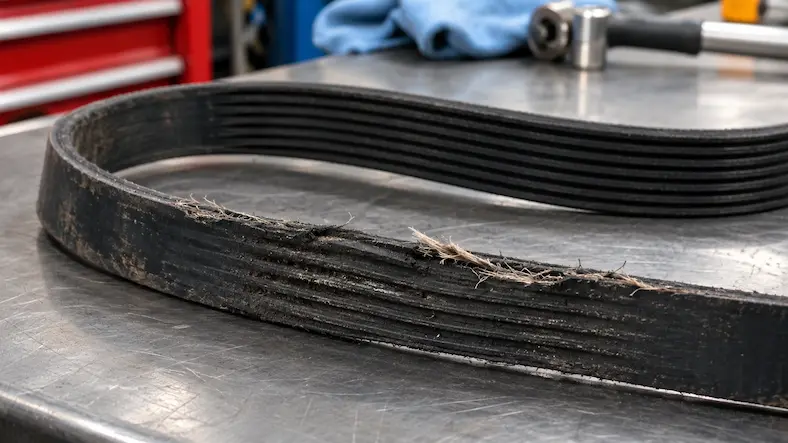
The condition of the belt itself can provide important clues.
Potential signs of deterioration include:
- Frayed or separating belt edges
- Missing sections of the ribbed surface
- Exposed reinforcing cords
- Uneven wear along one side
- Pieces of rubber separating from the belt
These conditions can indicate advanced belt deterioration or a problem with how the belt runs across the pulleys.
Visible cracks can also be relevant, but there is an important distinction between older and newer belt materials.
According to Gates’ technical guidance on serpentine belt inspection, modern EPDM rubber belts can lose significant rib material without developing obvious cracks. As a result, a belt that looks relatively smooth or crack-free may still be worn.
Inspecting rib profile and material loss requires an appropriate inspection method, rather than relying on appearance alone.
3. A Shiny or Glazed Belt Surface
A belt that develops an unusually shiny or polished contact surface may have experienced excessive friction or slipping.
Glazing can develop when the belt does not maintain adequate traction against the pulleys. Potential contributing factors include incorrect tension, a worn tensioner, pulley problems, and contamination.
Continued slipping can reduce the power transferred to belt-driven accessories and contribute to additional wear.
Simply installing another belt without identifying the underlying cause may allow the same problem to return.
4. Battery or Charging-System Warning Light
On vehicles with a belt-driven alternator, a slipping, displaced, or broken serpentine belt can reduce or interrupt alternator operation.
As a result, the battery or charging-system warning light may illuminate while the vehicle is running.
Other symptoms can include electrical accessories behaving abnormally, reduced lighting brightness, or a vehicle that eventually stalls because the battery can no longer provide sufficient power.
However, an illuminated battery warning light does not necessarily mean the serpentine belt is defective.
Important: If the charging-system warning appears while driving, reduce electrical loads where practical, find a safe place to stop, and arrange roadside assistance. The warning does not prove belt failure, but a loss of charging can leave the vehicle stalled in traffic.
5. Engine Overheating on Certain Vehicles
Some engines use the serpentine belt to operate the water pump. If the belt slips badly or breaks, coolant circulation may be reduced or stopped.
Without sufficient coolant circulation, engine temperature can rise rapidly, potentially causing serious engine damage.
However, not every water pump is driven by the serpentine belt. Some vehicles use timing-belt-driven or electric water pumps, so the relationship depends on the engine’s design.
Overheating can also result from low coolant, leaks, thermostat problems, radiator restrictions, or cooling-fan faults.
For a broader explanation of these alternatives, read our guide to why a car overheats intermittently.
If your temperature warning light illuminates or the gauge indicates overheating, pull over safely, turn off the engine, and arrange assistance. Never open a hot pressurized cooling-system cap.
6. Suddenly Heavy Steering on Vehicles With Hydraulic Power Steering
Some vehicles use a belt-driven hydraulic pump to provide power steering assistance.
If the serpentine belt breaks or the pump stops operating, the steering wheel may suddenly become much harder to turn, particularly at lower speeds.
This does not mean the steering mechanism necessarily stops working. However, the additional steering effort can make the vehicle difficult to control, especially during parking or emergency manoeuvres.
Vehicles with electric power steering do not rely on a serpentine-belt-driven hydraulic pump, so the same symptom may have a different cause.
If steering assistance suddenly changes, reduce speed carefully and stop somewhere safe rather than attempting to continue driving normally.
7. Air Conditioning Stops Cooling Properly
When an air conditioning compressor is driven by the serpentine belt, a slipping or broken belt can prevent the compressor from operating as intended.
You might notice that the air conditioning stops producing cold air, especially if the problem occurs alongside belt noise or other accessory-drive symptoms.
Nevertheless, warm air from the vents is not a reliable diagnosis of serpentine belt failure.
Low refrigerant, compressor faults, electrical problems, and other climate-control issues can produce similar results. Some modern vehicles also use electrically driven compressors.
If cooling performance is the only problem and there are no other warning signs, the air conditioning system itself may need inspection rather than the drive belt.
Bad Serpentine Belt or Another Problem?
Several components operate together within an accessory belt drive system. These include the belt, pulleys, tensioner, and the accessories receiving power from the belt.
A problem in one component can affect the others. For example, a misaligned pulley may cause unusual belt wear, while a defective tensioner may allow the belt to slip even when the belt material is relatively new.
The comparison below explains why symptom-based diagnosis requires care.
| Observed Symptom | Possible Belt-Related Cause | Other Possible Causes |
|---|---|---|
| Squealing or chirping | Belt slipping or tracking incorrectly | Worn tensioner, pulley misalignment, bearing fault |
| Battery warning light | Alternator belt slipping or broken | Alternator, wiring, or voltage-regulation fault |
| Engine overheating | Loss of belt-driven water pump operation | Coolant leak, thermostat, radiator, or cooling-fan problem |
| Heavy steering | Loss of belt-driven hydraulic assistance | Hydraulic system or electric steering fault |
| Air conditioning not cooling | Compressor not being driven correctly | Refrigerant or electrical system fault |
| Uneven belt-edge wear | Belt tracking problem | Misaligned pulley, tensioner, or bearing |
A defective tensioner can cause belt noise, slipping, misalignment, and additional stress on related accessories.
For that reason, replacing the belt should not automatically be considered the complete repair.
When Is It Unsafe to Drive With a Serpentine Belt Problem?
Quick answer: Stop driving as soon as it is safe if a suspected belt problem is accompanied by engine overheating, a charging-system warning, sudden loss of steering assistance, or a visibly broken belt. These conditions can lead to engine damage, stalling, or reduced vehicle control. Arrange towing or roadside assistance rather than assuming you can reach a repair shop.
Not every belt-related symptom is equally urgent. A minor noise without a warning light may allow time to arrange a prompt inspection, but it does not establish that the vehicle is safe for an extended journey.
Use the following distinctions when deciding what to do:
- Noise without other symptoms: Arrange professional inspection promptly. Avoid unnecessary long trips until the cause is identified.
- Fraying or obvious belt damage: Do not assume the belt will remain intact. Seek professional guidance before further driving.
- Charging-system warning: Stop safely and arrange assistance because the vehicle may lose electrical power.
- Engine overheating: Stop and switch off the engine. Continued operation can cause serious damage.
- Sudden heavy steering: Carefully move to a safe location and avoid continuing in normal traffic.
- Broken or displaced belt: Do not restart or drive the vehicle until its accessory-drive arrangement and potential damage have been assessed.
A broken belt may also leave loose material near other rotating components. Repeatedly attempting to restart the engine without understanding the failure can create additional risks.
The safest response depends on the vehicle, the affected accessories, and the conditions where the problem occurs.
How Can You Check for Serpentine Belt Wear Safely?
Vehicle owners can sometimes recognize warning signs without attempting repairs. However, a complete belt inspection should account for the belt’s condition, pulley alignment, tensioner performance, and the manufacturer’s specifications.
What You Can Observe
From the driver’s seat, you can monitor unusual noises, dashboard warnings, steering behaviour, and changes in air conditioning performance.
If you want to make a basic visual observation, park safely, switch off the engine, secure the vehicle, and follow the owner’s manual. Allow hot components to cool and keep clear of belts, fans, and other moving parts.
Only observe components that are clearly visible without reaching into the engine compartment. Cooling fans may start unexpectedly even when the engine is off. If access requires reaching past covers or moving components, leave the inspection to a mechanic.
Do not place hands or tools near a moving belt, remove protective covers unnecessarily, or attempt to check tension while the engine runs.
What a Qualified Mechanic Should Evaluate
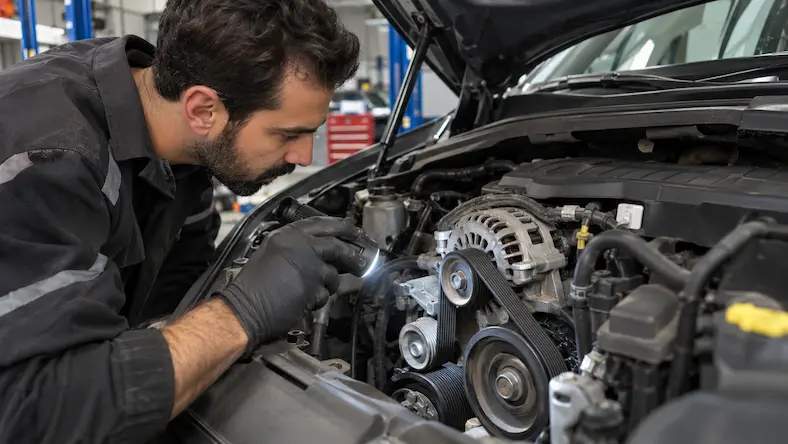
A thorough inspection may involve checking:
- Belt surface condition, rib wear, and edge damage
- Correct belt routing and pulley alignment
- Automatic tensioner condition and operation
- Idler pulleys and accessory bearings
- Signs of oil or coolant contamination
- The operation of affected accessories, where relevant
A technician may also investigate charging-system performance or cooling-system operation when the reported symptoms point to those systems.
Not every vehicle requires the same inspection procedure. Manufacturer service information determines the appropriate checks, permitted measurements, and replacement procedures.
Does a Serpentine Belt Always Need Replacement When It Makes Noise?
No. A noisy belt drive does not automatically mean the belt itself is the defective component.
Noise can originate from incorrect tension, pulley misalignment, a defective tensioner, or a failing accessory bearing. If one of those conditions is responsible, replacing the belt alone may not resolve the problem.
On the other hand, a belt with significant material loss, damaged reinforcing cords, or other unacceptable deterioration may require replacement even if it does not make noise.
The correct repair depends on identifying the actual fault and following the manufacturer’s service instructions.
Avoid using belt-dressing sprays or other chemicals as a substitute for diagnosis. Continental’s accessory-drive technical guidance advises against using sprays or chemicals to reduce belt noise.
How Often Should a Serpentine Belt Be Inspected or Replaced?
There is no single replacement interval that applies to every vehicle.
Maintenance requirements depend on the engine design, belt material, operating conditions, manufacturer instructions, and condition of the accessory-drive components.
Some vehicles have specified inspection or replacement schedules. Others use condition-based inspections alongside routine maintenance.
Consult the maintenance schedule for your exact vehicle, including its model year and engine. A generic mileage recommendation should not override manufacturer guidance.
It is also important to remember that belt condition cannot always be judged by cracks alone. Modern EPDM belts may show significant rib wear before obvious surface cracking develops.
For drivers in New Westminster and surrounding Metro Vancouver communities, routine maintenance provides an opportunity to identify belt wear and accessory-drive problems before an unexpected breakdown.
When Should a Mechanic Inspect Your Serpentine Belt?
Arrange a professional inspection for persistent belt-area noise, visible deterioration, or changes in the performance of belt-driven accessories. For overheating, a charging warning, or sudden steering-assistance loss, follow the urgent safety guidance above rather than scheduling a routine appointment.
When describing the problem, mention when it started, whether it happens during cold starts, and whether it changes with engine speed or accessory use. These observations can help the mechanic narrow down the cause without requiring you to inspect moving components.
For information about available inspection and replacement services, visit Matrix Auto Repair’s belts and hoses repair page.
Final Thoughts
Serpentine belt problems can begin with a noise or visible wear, but some failures affect critical vehicle systems. The key is recognizing warning signs without assuming that every squeal, warning light, or cooling issue has the same cause.
If you have noticed persistent belt noise or visible wear, contact Matrix Auto Repair in New Westminster to discuss an inspection. If a critical warning sign appears while driving, prioritize stopping safely and obtaining roadside assistance.