
What Should You Do If a Drive Belt Breaks While Driving?
Quick answer: If you suspect a drive belt has broken, maintain control, ease off the accelerator and pull over in a safe location as soon as possible. Use hazard lights when appropriate, switch off the engine once safely stopped and arrange roadside assistance or towing. Do not try to drive to a repair shop, even if the engine still runs.
If the steering suddenly becomes heavy, keep a firm grip on the wheel. Some vehicles use belt-driven hydraulic power steering, so losing the belt can remove steering assistance. The steering system may still function mechanically, but turning the wheel can require considerably more effort.
On a busy road, bridge or highway, avoid abrupt steering or braking and prioritize a safe stopping location. If you cannot stop somewhere protected from traffic, follow local roadside emergency guidance and call for help. Call 911 if there is an immediate danger to people.
Do not attempt to inspect or replace the belt beside moving traffic. If the engine has overheated, avoid opening the radiator cap or pressurized cooling system.
What Does a Serpentine Belt Actually Do?
A serpentine belt is a long, reinforced rubber drive belt with multiple ribs that fit into matching pulley grooves. The engine’s crankshaft pulley drives the belt, transferring mechanical power to selected accessories.
Depending on the vehicle, those accessories may include the alternator, hydraulic power steering pump, air conditioning compressor and engine water pump.
Not every vehicle uses the same arrangement. Some engines have separate accessory belts. Others use electrically powered steering or water pumps, while certain water pumps are driven by a timing belt or another mechanism.
This distinction matters because the consequences of a broken serpentine belt are determined by the actual engine design, not simply by the presence of a belt.
Serpentine Belt vs. Timing Belt
A serpentine belt drives external engine accessories. A timing belt, when fitted, synchronizes crankshaft and camshaft rotation so the engine’s valves operate at the correct time.
A broken timing belt is a different mechanical failure. On some engine designs, timing belt failure can allow internal components to collide, resulting in severe engine damage. A serpentine belt failure generally affects accessory operation first, although overheating or other secondary damage can still occur.
Do not assume that a noise or broken belt visible near the engine identifies which system has failed. A qualified technician should confirm the problem.
What Happens to Your Car When the Serpentine Belt Breaks?
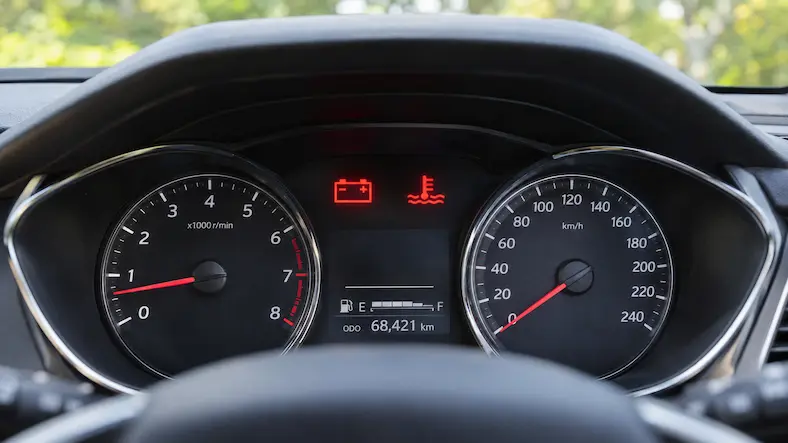
The effects can appear together or separately. Understanding the relationship between the belt and each component helps explain why one driver may experience overheating while another first notices an electrical warning.
1. The Alternator May Stop Charging the Battery
On vehicles with a belt-driven alternator, a broken belt stops the alternator from generating electricity through engine rotation.
The vehicle may initially continue running on available battery energy, but that reserve is limited. As the battery discharges, electronic systems may malfunction and the engine may eventually stall.
A battery-shaped dashboard warning light may illuminate because the charging system is no longer operating correctly. However, the light does not prove the belt has broken. Alternator faults, electrical connections and other charging-system problems can produce similar warnings.
If a charging warning appears alongside a sudden noise from the engine compartment, treat the combination as a possible accessory-drive failure requiring prompt attention.
2. Steering Assistance May Be Lost
Vehicles with belt-driven hydraulic power steering use an engine-powered pump to provide steering assistance. If the belt stops turning the pump, the steering wheel may become substantially harder to turn, especially at low speeds.
This does not necessarily mean the steering linkage itself has failed. However, the sudden increase in steering effort can make manoeuvring more difficult.
Vehicles with electric power steering do not rely on a belt-driven hydraulic pump. Their steering assistance may initially remain available after the belt fails, although an electrical charging failure could eventually affect it.
Because the steering response depends on vehicle design and electrical condition, drivers should not assume the vehicle will remain easy to control.
3. The Engine May Overheat
Some engines use the serpentine belt to drive the water pump, which circulates coolant between the engine and cooling system.
If that belt breaks, coolant circulation may be severely reduced or interrupted. The engine can then overheat, potentially damaging components such as the cylinder head or head gasket.
Not every broken serpentine belt causes immediate overheating. If the water pump operates independently of the accessory belt, coolant circulation may continue. Nevertheless, other belt-driven functions may already have stopped.
Overheating can develop before a driver recognizes the severity of the problem. Do not rely on a normal-looking temperature gauge as permission to continue driving after a suspected belt failure.
If the engine temperature rises intermittently without an obvious belt problem, read our guide to possible causes of intermittent engine overheating.
4. Your Air Conditioning May Stop Working
On conventional belt-driven air conditioning systems, the compressor may stop operating when the serpentine belt breaks. The cabin air may gradually become warmer because the system can no longer provide normal cooling.
Loss of air conditioning alone does not confirm a broken belt. Refrigerant leaks, compressor faults, electrical problems and other HVAC issues can also cause warm air.
Some hybrid, electric and other vehicle designs use electrically driven compressors, so their operation differs from conventional belt-driven systems.
Can You Keep Driving With a Broken Serpentine Belt?
Quick answer: You should not continue your journey with a confirmed broken serpentine belt. Even if the engine still runs, the vehicle may have lost charging capacity, steering assistance or coolant circulation. There is no universally safe driving distance or time limit after a belt failure.
Drivers sometimes assume they can reach the nearest garage if it is only a few kilometres away. That decision can be risky because the effects of belt failure vary significantly between vehicles.
For example, a vehicle whose water pump depends on the serpentine belt could experience damaging temperature increases. Another vehicle may continue circulating coolant but lose electrical charging, leaving the engine vulnerable to stalling once the battery becomes depleted.
A vehicle that still starts, idles or accelerates is not necessarily safe to drive. A functioning engine does not confirm that its essential accessory systems are operating.
Moving only as far as necessary to reach a safe stopping position is different from continuing a trip or attempting to drive several kilometres to a repair shop.
When Is It Especially Unsafe to Continue?
Stop as soon as it is safe if you experience any of the following:
- A high engine temperature warning or rapidly increasing temperature gauge.
- Suddenly heavy steering or difficulty maintaining control.
- A charging-system warning accompanied by unusual belt or pulley noises.
- Steam, a strong coolant smell or other signs of overheating.
- Repeated electrical failures, loss of engine power or stalling.
These symptoms are not exclusive to serpentine belt failure. Some may indicate other serious mechanical or electrical faults. Regardless of the cause, they justify a safe stop and professional assessment.
How Can You Tell If Your Serpentine Belt Has Broken?
A complete belt failure can happen suddenly, sometimes with little warning. In other cases, drivers notice noises or changes in accessory operation before the belt breaks.
Possible warning signs include:
- A sudden snapping or slapping sound: A belt may break or strike nearby components, although other engine-bay faults can create similar sounds.
- Squealing or chirping: A slipping belt, worn pulley, tensioner problem or accessory-bearing fault may create noise that changes with engine speed.
- Visible fraying or missing belt material: Damage may indicate deterioration or a mechanical problem with the accessory drive.
- A battery or charging-system warning: The alternator may no longer be driven properly.
- A sudden change in steering effort: Hydraulic steering assistance may have been lost.
- Unexpected temperature changes: Coolant circulation may be affected on engines with belt-driven water pumps.
Symptoms alone cannot establish the cause. A belt may snap, shred, slip or come off its pulleys, and each situation requires inspection. A missing or displaced belt can be a useful clue, but do not open the hood or approach engine components unless the vehicle is safely parked, the engine is switched off and the area is safe.
Never reach toward belts or pulleys while the engine is running. An electric cooling fan can start unexpectedly, even when other components have stopped. Leave hands-on inspections to a qualified technician.
For other electrical warning symptoms, see our article on why dashboard lights flicker.
What Else Can Cause Similar Symptoms?
Not every charging failure, squealing sound or steering problem means the serpentine belt has snapped.
Several related faults can produce overlapping symptoms:
| Possible problem | What may happen | Why diagnosis matters |
|---|---|---|
| Worn belt tensioner | The belt slips, vibrates or loses correct tension. | A replacement belt may fail again if the tensioner problem remains. |
| Damaged idler pulley | Noise, irregular belt movement or belt damage. | The pulley or bearing may need attention in addition to the belt. |
| Seized accessory bearing | The belt may slip, overheat, shred or break. | The affected accessory must be assessed before another belt is installed. |
| Alternator or electrical fault | Battery warnings, dimming lights or charging problems. | The belt may still be intact and operating normally. |
| Cooling-system fault | Rising temperature, coolant loss or overheating. | The cause may involve the thermostat, pump, radiator or another component. |
| Power steering system fault | Heavy steering or abnormal steering noise. | The problem may originate outside the accessory belt system. |
This is why replacing a belt solely because the engine is squealing may not solve the underlying issue. A correct diagnosis considers the belt, its routing and the condition of the components it drives.
Why Do Serpentine Belts Break?
Repeated bending, temperature changes and mechanical loading affect belt condition, but premature failure can also result from faults elsewhere in the accessory-drive system.
Normal Wear and Material Deterioration
The belt’s ribs wear as they flex and contact the pulleys. Cracks, glazing, missing rib sections and fraying can indicate damage, although some modern belt materials can wear without visible cracking.
Tensioner and Pulley Problems
A tensioner helps maintain appropriate belt tension while the belt moves through its pulley system. If the tensioner is worn, damaged or incorrectly operating, the belt may slip or move irregularly.
Pulley misalignment or a failing bearing can also accelerate wear. In severe cases, an accessory that stops rotating freely may contribute to belt destruction.
Fluid Contamination
Engine oil or other leaked fluids can contaminate a belt, potentially affecting its grip or material integrity. A new belt installed without addressing the source of contamination may develop problems again.
Before fitting a replacement, a technician should identify the source of contamination and determine whether the belt or related components have been damaged.
What Should a Mechanic Inspect After a Broken Belt?
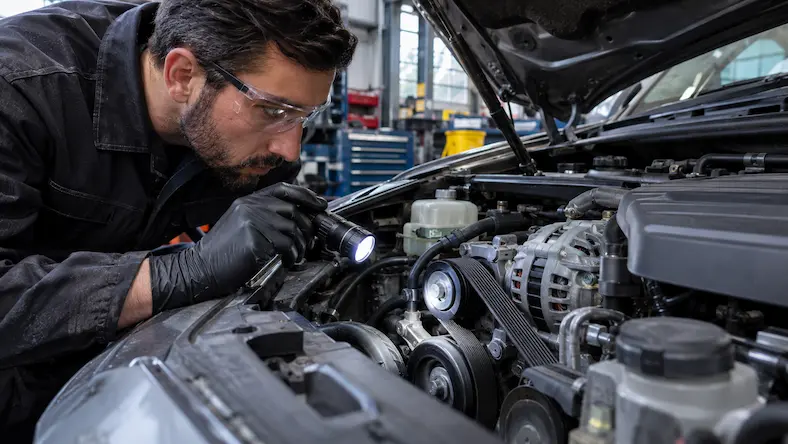
Quick answer: A qualified mechanic should inspect the failed belt, tensioner, idler pulleys, accessory bearings, alignment and any signs of fluid contamination. The inspection should also consider whether the failure affected the charging system, cooling system or other components. Replacing the belt alone may not address the cause.
Before repair, the technician should identify the vehicle’s engine configuration and confirm the correct belt routing and part specifications using applicable manufacturer information.
The inspection may include pulley and bearing condition, alignment, tensioner operation, secure mounting and evidence of fluid leaks. A technician should identify any underlying fault that could damage a new belt.
If the vehicle overheated, additional cooling-system assessment may be necessary. If the charging system stopped operating, the battery and charging performance may also need testing.
The technician should also consider whether belt fragments could have affected nearby components. On certain engine designs, debris entering sensitive areas may create additional concerns that require manufacturer-specific inspection procedures.
Replacement parts and installation procedures should match the relevant vehicle specifications. Belt routing, tensioning methods and associated component replacement requirements are not universal.
Matrix Auto Repair lists serpentine and drive belt inspection and replacement among its belts and hoses repair services in New Westminster.
How Can You Reduce the Risk of Serpentine Belt Failure?
Although no inspection can guarantee that a belt will never break, routine maintenance can help identify deterioration or related mechanical problems before a breakdown occurs.
Useful preventive measures include:
- Follow manufacturer guidance: Consult your vehicle’s maintenance schedule for applicable belt inspection and replacement requirements.
- Address unusual noises: Persistent squealing, chirping or grinding from the accessory-drive area deserves investigation.
- Inspect related components: Belt condition should be considered alongside pulleys, tensioners and accessible accessories.
- Investigate fluid leaks: Oil or coolant contamination can contribute to belt problems and should not be ignored.
- Pay attention to warning lights: Charging or temperature warnings may indicate problems that need prompt attention.
- Use the correct replacement parts: Belt dimensions, construction and routing must match the applicable engine configuration.
There is no single replacement mileage that applies to every serpentine belt. Recommendations differ by manufacturer, engine, belt design and operating conditions. Some schedules specify inspections, while others identify replacement requirements or condition-based maintenance.
A belt may appear intact while its ribs or tensioning system are worn. Have a qualified technician evaluate the accessory drive when there are warning signs or when the manufacturer recommends an inspection.
What Should You Remember About a Broken Drive Belt?
A broken serpentine belt may affect charging, steering assistance, cooling or air conditioning, depending on the vehicle’s accessory-drive design. The engine may continue running temporarily, but that does not make continued driving safe.
If you suspect a belt has failed, stop safely, switch off the engine and arrange an appropriate inspection. Identifying why the belt broke is as important as replacing it.
If your vehicle has belt-related warning signs, book an appointment with Matrix Auto Repair in New Westminster for an assessment. If the belt has already broken, arrange safe transportation rather than driving the vehicle to the shop.